



Calcium Channel
Ca2+ channels; Ca channels
Calcium channel is an ion channel which displays selective permeability to calcium ions. It is sometimes synonymous as voltage-dependent calcium channel, although there are also ligand-gated calcium channels. Voltage-gated calcium (CaV) channels catalyse rapid, highly selective influx of Ca2+ into cells despite a 70-fold higher extracellular concentration of Na+. Some calcium channel blockers have the added benefit of slowing your heart rate, which can further reduce blood pressure, relieve chest pain (angina) and control an irregular heartbeat.
Calcium Channel Isoform Specific Products
All Product Categories
-
Calcium Channel Inhibitors
(581)
View all products
-
Calcium Channel Agonists
(35)
View all products
-
Calcium Channel Antagonists
(213)
View all products
-
Calcium Channel Activators
(85)
View all products
-
Calcium Channel Modulators
(46)
View all products
-
Calcium Channel Chemical
(1)
View all products
-
Calcium Channel Inducers
(11)
View all products
-
Calcium Channel Controls
(10)
View all products
-
Calcium Channel Ligands
(7)
View all products
-
Calcium Channel Related Products (1225)
Related Products (1225)

-
Antibodies (29)
-
Related Compound Screening Libraries (1)
-
Calcium Channel Isoform Comparison
-
Tetracaine hydrochloride (Standard)
 0 ImagesTetracaine (hydrochloride) (Standard) is the analytical standard of Tetracaine (hydrochloride). This product is intended for research and analytical applications. Tetracaine hydrochloride (Amethocaine hydrochloride) is a calcium channel protein inhibitor and blocks voltage-sensitive release of Ca2+ from sarcoplasmic reticulum. Tetracaine hydrochloride is mainly used topically in ophthalmology and as an antipruritic.
-
PLTX-II
 0 ImagesCat. No.: HY-P5954PLTX-II is a calcium channel blocker. PLTX-II has a 44-residue peptide containing ten Cys residues and an O-palmitoylated threonine amide at the carboxy-terminus.
-
Terodiline
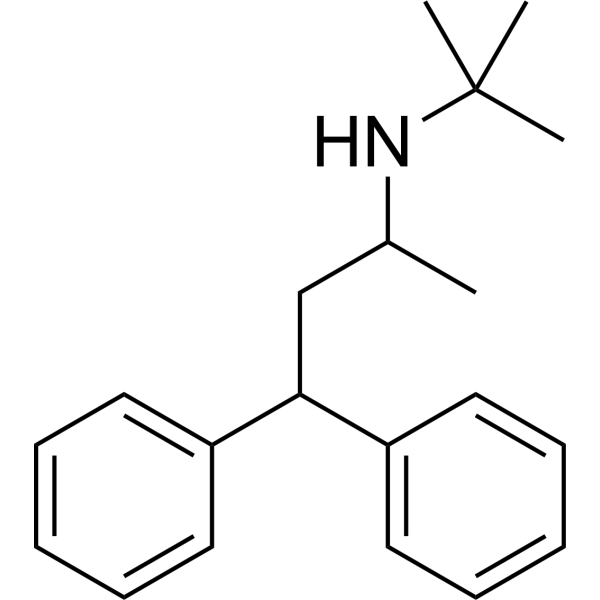 0 ImagesCat. No.: HY-16489CAS No.: 15793-40-5Terodiline, an antispasmodic agent, blocks hERG current with the IC50 of 375 nM. Terodiline has both anticholinergic and calcium antagonist properties, and effectively reduces abnormal bladder contractions caused by detrusor instability. Terodiline can be used for the research of urinary incontinence.
-
Onychocin B
 0 ImagesCat. No.: HY-175395Onychocin B is a cyclic tetrapeptide isolated from Onychocola sclerotica. Onychocin B is a calcium channel blocker with an IC50 of 7.1 μM for Cav1.2.
-
Chrysosplenol C
 0 ImagesCat. No.: HY-N13747CAS No.: 23370-16-3Chrysosplenol C is a type of flavonoid compound. Chrysosplenol C selectively activates cardiac myosin ATPase, with its EC50 being 45 µM. Chrysosplenol C enhances the release of intracellular calcium ions by activating protein kinase C (PKC), thereby increasing the contractility of rat ventricular muscle cells. Chrysosplenol C can be used in the research of heart failure.
-
Vatanidipine
 0 ImagesCat. No.: HY-106832CAS No.: 116308-55-5Synonyms: Watanidipine; AE0047 free baseVatanidipine (Watanidipine) is an orally active dihydropyridine (DHP)-type calcium channel blocker and a useful antihypertensive agent. Vatanidipine shows vasodilatory effects and also suppresses noradrenaline release from sympathetic nerve endings.
-
Cav 3.2 inhibitor 4
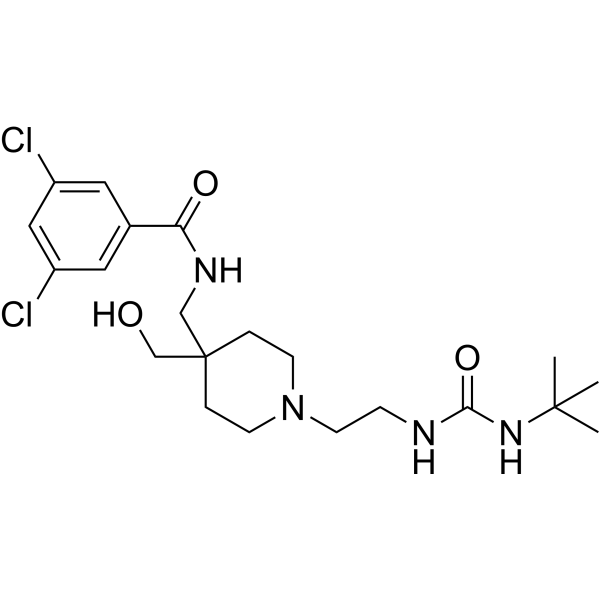 0 ImagesCat. No.: HY-154832CAS No.: 1416984-93-4Cav 3.2 inhibitor 4 (compound 21) is a potent, peripherally restricted, selective T-type calcium channel (Cav3.2) inhibitor, with an IC50 of 0.6 μM. Cav 3.2 inhibitor 4 can be used for the research of atrial fibrillation.
-
GZ4
 0 ImagesCat. No.: HY-135228CAS No.: 68312-88-9GZ4 is a calcium current inhibitor with direct inhibitory activity on cell surface channels. GZ4 inhibition reverses mechanical hyperalgesia/hyperalgesia in a spinal nerve ligation-induced neuropathic pain model. The mechanism of action of GZ4 is similar to that of gabapentin, but the time course of its biological effects is more rapid, indicating that GZ4 can directly inhibit calcium channel currents.

-
Lercanidipine-13C,d3-1 hydrochloride
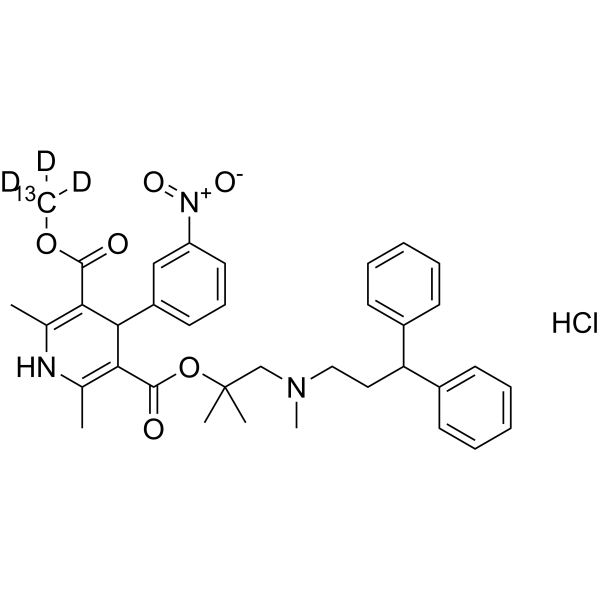 0 ImagesCat. No.: HY-B0612AS1CAS No.: 2747918-20-1Lercanidipine-13C,d3-1 (hydrochloride) is deuterium labeled Lercanidipine (hydrochloride). Lercanidipine hydrochloride is a lipophilic third-generation dihydropyridine-calcium channel blocker (DHP-CCB). Lercanidipine hydrochloride has long lasting antihypertensive action and reno-protective effect.
-
Calcicludine
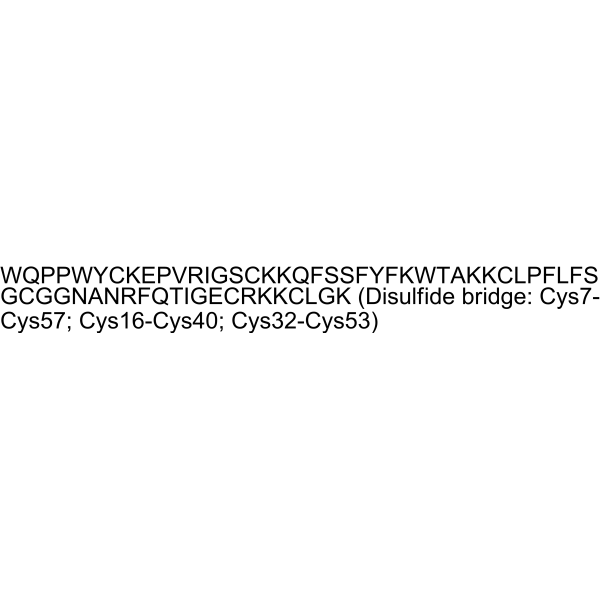 0 ImagesCat. No.: HY-P3065CAS No.: 178036-64-1Calcicludine is a protein toxin from the venom of the green mamba that inhibits high-voltage-activated calcium channel, especially L-type calcium channel.
-
(+)-Niguldipine
 0 ImagesCat. No.: HY-137203CAS No.: 113165-32-5(+)-Niguldipine is a 1,4-DHP receptor ligand associated with L-type Ca2+ channels (with Ki values of 85 pmol/L in guinea pig skeletal muscle, 140 pmol/L in brain, and 45 pmol/L in heart) as well as an α1-adrenergic receptor ligand (with a Ki value of 78 nmol/L). (+)-Niguldipine shows much higher binding selectivity for α1α-adrenergic receptors than for α1B-adrenergic receptors. (+)-Niguldipine can be used in studies related to hypertension.
-
Diadenosine pentaphosphate
 0 ImagesCat. No.: HY-113273CAS No.: 41708-91-2Synonyms: Ap5A; P1,P5-Di(adenosine-5'-)pentaphosphateDiadenosine pentaphosphate (Ap5A; P1,P5-Di(adenosine-5'-)pentaphosphate) is an endogenous generated diadenosine polyphosphate, possessing the dual identities of intracellular alarm signal and extracellular signaling molecule. Diadenosine pentaphosphate regulates calcium signaling in the nervous, cardiac and peripheral sensory systems by activating P2X1/P2X3/P2Y receptor and RyR2 channels (EC50 = 140 μM). Diadenosine pentaphosphate can be used in studies related to intracellular calcium release channels, cardiovascular diseases and nociception (pain).
-
Elgodipine
 0 ImagesCat. No.: HY-126401CAS No.: 119413-55-7Synonyms: IQB-875 free baseElgodipine (IQB-875 free base) is an orally active dihydropyridine calcium antagonist and an antianginal compound. Elgodipine inhibits both T- and L-type calcium channels (IC50: 32 and 2.3 nM). Elgodipine lowers systemic vascular resistance and improves systolic cardiac function.
-
Norverapamil-d7
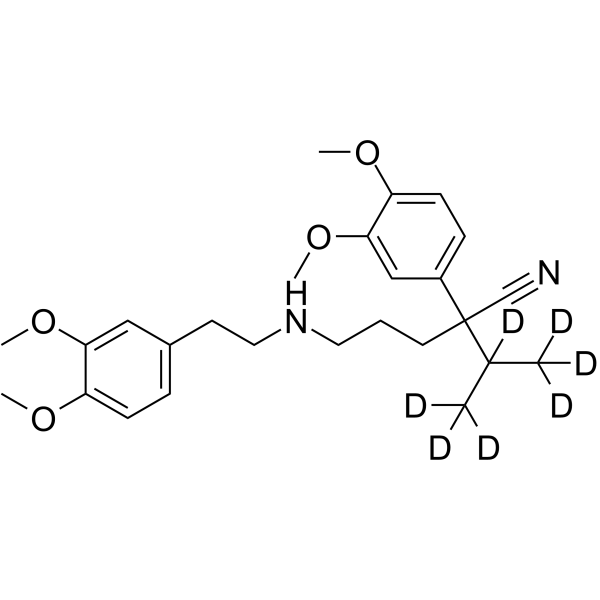 0 ImagesCat. No.: HY-135328SCAS No.: 263175-44-6Synonyms: (±)-Norverapamil-d7; D591-d7Norverapamil-d7 is a deuterium labeled Norverapamil ((±)-Norverapamil). Norverapamil, an N-demethylated metabolite of Verapamil, is a L-type calcium channel blocker and a P-glycoprotein (P-gp) function inhibitor.
-
Lomerizine-d5
 0 ImagesCat. No.: HY-B0768S1Synonyms: KB-2796-d5 free baseLomerizine-d5 (KB-2796-d5 free base) is the deuterium labeled Lomerizine (HY-B0768). Lomerizine is an antagonist of L- and T-type voltagegated calcium channels.
-
1-Octanol (Standard)
 0 ImagesCat. No.: HY-W032013RCAS No.: 111-87-5Synonyms: Octanol (Standard)1-Octanol (Standard) is the analytical standard of 1-Octanol. This product is intended for research and analytical applications. 1-Octanol (Octanol), a saturated fatty alcohol, is a T-type calcium channels (T-channels) inhibitor with an IC50 of 4 μM for native T-currents. 1-Octanol is a highly attractive biofuel with diesel-like properties.
-
Belfosdil
 0 ImagesCat. No.: HY-113671CAS No.: 103486-79-9Belfosdil is an orally active and highly specific calcium channel blocker that also inhibits the activity of acyl coenzyme A cholesterol acyltransferase.
-
L-Phenylalanine-d
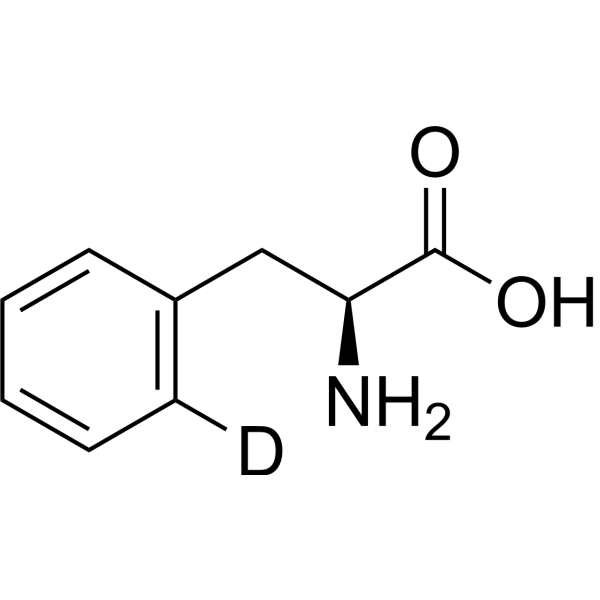 0 ImagesCat. No.: HY-N0215S13CAS No.: 54793-54-3Synonyms: (S)-2-Amino-3-phenylpropionic acid-d1L-Phenylalanine-d is the deuterium labeled L-Phenylalanine. L-Phenylalanine ((S)-2-Amino-3-phenylpropionic acid) is an essential amino acid isolated from Escherichia coli. L-Phenylalanine is a α2δ subunit of voltage-dependent Ca+ channels antagonist with a Ki of 980 nM. L-phenylalanine is a competitive antagonist for the glycine- and glutamate-binding sites of N-methyl-D-aspartate receptors (NMDARs) (KB of 573 μM ) and non-NMDARs, respectively. L-Phenylalanine is widely used in the production of food flavors and pharmaceuticals.
-
TAK-137
 0 ImagesCat. No.: HY-204388CAS No.: 1358749-55-9TAK-137 is an AMPA receptor potentiator with weak agonistic effect. TAK-137 binds to the AMPA receptor ligand binding domain in a glutamate-dependent manner. TAK-137 potentiates AMPA-induced currents and Ca2+ influx. TAK-137 can be used for the research of neurological disease.




